
rule 983710 to keeping friends : do not use another person's vulnerabilities against them, especially to win a battle of opinion, it is loveless and insecure. no one wins + only boundaries will be made. it is not your job to tell anyone else how they should feel, think or act, especially when you asked for their opinion. opinion's change but, attacking someone's character, wounds + sacredness with condescending statements + "privileged" arrogance is petty + not authentic. respect should not lie in the hands of agreement with others but, rather in your personal truth + self love. if you feel good about what you think, own it, don't put it on someone else to meet you where ever you are, especially with tactics that are undermining + pretentious. true love is accepting someone's own stance, right where they are, "with" or "without" you. don't be a bully, it's not all about you.





Children are often viewed as highly resilient and able to bounce back from just about any situation, but traumatic experiences in childhood can have severe and long-lasting effects well into adulthood if they are left unresolved. Childhood trauma can result from anything that makes a child feel helpless and disrupts their sense of safety and security, including: sexual, physical or verbal abuse; domestic violence; an unstable or unsafe environment; separation from a parent; neglect; bullying; serious illness; or intrusive medical procedures.
If you’re living with the emotional and psychological consequences of a traumatic childhood, there is hope. Here are seven ways to heal your childhood trauma and reclaim your life.
1. Acknowledge and recognize the trauma for what it is. Victims of childhood trauma often spend years minimizing the event or dismissing it by pretending it didn’t happen or by succumbing to feelings of guilt or self-blame. The only way you can begin healing is to acknowledge that a traumatic event did occur and that you were not responsible for it.
2. Reclaim control. Feelings of helplessness can carry well over into adulthood and can make you feel and act like a perpetual victim, causing you to make choices based on your past pain. When you’re a victim, the past is in control of your present. But when you’ve conquered your pain, the present is controlled by you. There may always be a battle between past and present, but as long as you’re willing to let go of the old defenses and crutches you used as a child to navigate your trauma, you will be able to reclaim control of your life now and heal your pain.
3. Seek support and don’t isolate yourself. A natural instinct that many trauma survivors have is to withdraw from others, but this will only make things worse. A big part of the healing process is connecting to other people, so make the effort to maintain your relationships and seek support. Talk to a trusted family member, friend or counselor and consider joining a support group for survivors of childhood trauma.
4. Take care of your health. Your ability to cope with stress will increase if you are healthy. Establish a daily routine that allows you to get plenty of rest, eat a well-balanced diet and exercise regularly. Most importantly, stay away from alcohol and drugs. These might provide temporary relief but will inevitably increase your feelings of depression, anxiety and isolation and can worsen your trauma symptoms.
5. Learn the true meaning of acceptance and letting go. Just because you accept something doesn’t mean you’re embracing your trauma or that you like it or agree with it. Acceptance means you’ve decided what you’re going to do with it. You can decide to let it rule your life or you can decide to let it go. Letting go doesn’t mean “poof!” it’s magically gone. Letting go means no longer allowing your bad memories and feelings of a bad childhood to rob yourself of living a good life now.
6. Replace bad habits with good ones. Bad habits can take many forms, like negativity and always mistrusting others, or turning to alcohol or drugs when feelings become too hard to bear. Bad habits can be hard to break, especially when they’re used as crutches to help you avoid reliving the pain and trauma of your childhood. A support group or a therapist can help you learn the tools necessary to break your bad habits and replace them with good ones.
7. Be patient with yourself. When you’ve been seriously hurt as a child you develop out-of-control emotions, hopelessness, defense mechanisms and warped perceptions that are difficult to let go of. It will take a lot of time and hard work to let go of these feelings. Be patient with yourself and honor your progress, no matter how small it may seem. It’s the little victories in your recovery that will eventually help you win the battle of healing your childhood trauma.

Sometimes you have to come back to places and people to realize how far you've come. It can be beautiful and heart breaking all at the same time.
Sometimes you have to see people for who they are in order to move on to be who you are and it can be tough, but this is a necessary step to growing. It’s a choice to be stuck or unstuck.
Sometimes “friends” don't want to see you shine or be a part of an exchange of encouragement. Call it what it is, make a boundary. Ain't no body got time for that. Let them go.
Sometimes you have to have uncomfortable conversations. If you don't say what you need to, you may never get the chance to say anything again. It's not about the resolution, you may not say everything perfectly - it's about standing up for yourself and not being passive and it’s not about being right. It’s about being aware and using the gift of language. Words are magic.
Sometimes you have to realize your longest friend, isn't your best friend. Appreciate the lesson and love no matter what. Make new connections.
Sometimes you have to be the bigger person with the judgments and disrespect from others who really just hate themselves. And while you may sympathize and have compassion for them, you cannot surround yourself with that energy. It’s not yours to carry, you already got your own bullshit to work through.
Sometimes you won't have an external safe place to go to, but remember you've got your body and mind to hold you tenderly if you choose to let them.
Sometimes no one will understand how you feel, but that doesn't mean it's not real and true. Get it out, write shit down - having a journal is fucking awesome.
Sometimes you have to shift and change quickly to keep up with your dreams.
Sometimes you will have to trip, fall, and crumble over and over again before you can find your steady pace. Don’t allow the spectators to tell how to move, they don’t know what’s up.
Sometimes people will ask questions that are seemingly in care for you only to figure out something about themselves or gossip to others. You don't owe them shit. Maybe just listening is key in times like these or just simply walking away.
Sometimes you'll change your mind and that's okay. Embrace it, say it out loud, don't pretend you're not aware. Change is constant, don’t get weighed down by what once was or could have been.
Sometimes you may be the only one standing up for what you feel is right while others remain just sheep. Let them be sheep. You know you're a wolf and not a bad one, don't get it twisted.
Sometimes you won't have any money and can't play the game everyone else is playing. It’s okay, that shit comes and goes, but cannot determine who you are, ever.
Sometimes all you have is your kindness and mindfulness to give and that is much more than enough, but don't exhaust yourself with emotional vampires and belligerent soul suckers. They are real, trust me.
Sometimes people won't believe in your dreams, but don't worry about them. Remember, haters are people who gave up on their dreams, so why would you care about their opinions any way?
And all these sometimes are a part of just one time, one life, the one time you are breathing, capable of moving, thinking, and doing.
And with this one time of life, do whatever you need to to be true to yourself, especially in the face of fear, disrespect, betrayal, abuse, misunderstandings, because for all we know, this is your only time to be your authentic self. So be it!
BE YOURSELF with values and integrity. Use your grit, you are the driver of your life, not the passenger, not the victim, not the judge. No one else can determine who you are and what you will do with this one life of yours, that's up to you. It’s forever a work in progress. Don’t blame the world, it’s not against you.
BE MORE / FEAR LESS
KEEP GOING / NEVER KNOWING
LISTEN TO YOUR GUT / STAY OUT OF THE RUT
WE ARE HERE / WE ARE BLESSED
KEEP GOING / NEVER KNOWING
LISTEN TO YOUR GUT / STAY OUT OF THE RUT
WE ARE HERE / WE ARE BLESSED
"We go to our childhood home looking for something we lost. Our mouths drip with questions of how we became old suddenly and where our feeling of naivety went, but all we find is another place we no longer belong. Instead of answers we are filled with the sense that something we never thought to give name to, that we never took the time to acknowledge because we assumed it would always be with us, that it was in-fact a part of us, is gone."
- Lora Mathis


Imagine that you awake early one morning overflowing with enthusiasm for the day. You feel good. You are happy and have plenty of energy to face the day. Then at breakfast, you have a big fight with your spouse, and a flood of emotion comes out. You get mad, and in the emotion of anger you spend a lot of personal power. After the fight, you feel drained, and you just want to go and cry. In fact, you feel so tired that you go to your room, collapse, and try to recover. You spend the day wrapped up in your emotions. You have no energy to keep going, and you just want to walk away from everything.
Every day we awake with a certain amount of mental, emotional, and physical energy that we spend throughout the day. If we allow our emotions to deplete our energy, we have no energy to change our life or to give to others.
The way you see the world will depend upon the emotions you are feeling. When you are angry, everything around you is wrong, nothing is right. You blame everything including the weather; whether it's raining or the sun is shining, nothing pleases you. When you are sad, everything around you is sad and makes you cry. You see the trees and you feel sad; you see the rain and everything looks so sad. Perhaps you feel vulnerable and have a need to protect yourself because you don't know in what moment someone will attack you. You do not trust anything or anyone around you. This is because you see the world with the eyes of fear!
Imagine that the human mind is the same as your skin. You can touch healthy skin and it feels wonderful. Your skin is made for perception and the sensation of touch is wonderful. Now imagine you have an injury and the skin gets cut and infected. If you touch the infected skin, it is going to hurt, so you try to cover and protect the skin. You will not enjoy being touched because it hurts.
Now imagine that all humans have this skin disease. Nobody can touch each other because it is going to hurt. Everyone has wounds on their skin, so the infection is seen as normal, the pain is also considered normal; we believe we are supposed to be that way.
Can you imagine how we would behave with each other if all humans in the world had this skin disease? Of course we would hardly ever hug each other because it would be too painful. So we would need to create a lot of distance between us.
The human mind is exactly like this description of infected skin. Every human has an emotional body completely covered with infected wounds. Each would is infected with emotional poison - the poison of all the emotions that makes us suffer, such as hate, anger, envy, and sadness. An action of injustice opens a wound in the mind and we react with emotional poison because of the concepts and beliefs we have about injustice and what is fair. The mind is so wounded and full of poison by the process of domestication, that everyone describes the wounded mind as normal. This is considered normal, but I can tell you it is not normal.
We have a dysfunctional dream of the planet, and humans are mentally sick with disease called fear. The symptoms of the disease are all the emotions that make humans suffer: anger, hate, sadness, envy, and betrayal. When the fear is too great, the reasoning mind begins to fail and we call this mental illness. Psychotic behavior occurs when the mind is so frightened and the wounds so painful, that it seems better to break contact with the outside world.
If we can see our state of mind as a disease, we find there is a cure. We don't have to suffer any longer. First we need the truth to open the emotional wounds, take the poison out, and heal the wounds completely. How do we do this? We must forgive those we feel have wronged us, not because they deserve to be forgiven, but because we love our self so much we don't want to keep paying for the injustice.
Forgiveness is the only way to heal. We can choose to forgive because we feel compassion for ourselves. We can let go of the resentment and declare, "That's enough! I will no longer be the big Judge that goes against myself. I will no longer beat myself up and abuse myself. I will no longer be the Victim."
First, we need to forgive our parents, our brothers, our sisters, our friends, and God. Once you forgive God, you can finally forgive yourself. Once you forgive yourself, the self-rejection in your mind is over. Self-acceptance begins, and the self-love will grow so strong that you will finally accept yourself just the way you are. That's the beginning of the free human. Forgiveness is the key.
You will know you have forgiven someone when you see them and you no longer have an emotional reaction. You will hear the name of the person and you will have no emotional reaction. When someone can touch what used to be a wound and it no longer hurts you, then you know you have truly forgiven.
The truth is like a scalpel. The truth is painful, because it opens all of the wounds which are covered by lies so that we can be healed. These lies are what we call the denial system. It's a good thing we have the denial system, because it allows us to cover our wounds and still function. But once we no longer have any wounds or any poison, we don't need to lie anymore. We don't need the denial system, because a healthy mind, like healthy skin, can be touched without hurting. It's pleasurable for the mind to be touched when it is clean.
The problem with most people is that they lose control of their emotions. It is the emotions that control the behavior of the human, not the human who controls the emotions. When we lose control we say things that we don't want to say, and do things that we don't want to do. This is why it is so important to be impeccable with our word and to become a spiritual warrior. We must learn to control the emotions so we have enough personal power to change our fear-based agreements, escape from hell, and create our own personal heaven.
How are we to become a warrior? There are certain characteristics of the warrior that are nearly the same around the world. The warrior has awareness. That's very important. We are aware that we are at war, and the war in our minds requires discipline. Not the discipline of a solider, but the discipline of a warrior. Not the discipline from the outside to tell us what to do and what not to do, but the discipline to be ourselves, no matter what.
The warrior has control. Not control over another human, but control over one's own emotions, control over one's own self. It is when we lose control that we repress the emotions, not when we are in control. The big difference between a warrior and a victim is that the victim represses, and the warrior refrains. Victims repress because they are afraid to show the emotions, afraid to say what they want to say. To refrain is not the same thing as repression. To refrain is tot hold the emotions and to express them in the right moment, not before, not later. That is why warriors are impeccable. They have completely control over their own emotions and therefore over their own behavior.
THE DISCIPLINE OF THE WARRIOR: CONTROLLING YOUR OWN BEHAVIOR
A Toltec Wisdom Book : The Four Agreements by Don Miguel Ruiz


Beautiful morning, you're the sun in my morning babe
Nothing unwanted
Beautiful morning, you're the sun in my morning babe
Nothing unwanted
Just want to feel liberated, I, I, II just want to feel liberated, I, I, I
If I ever instigated I’m sorry
Tell me who in here can relate,
I, I, I

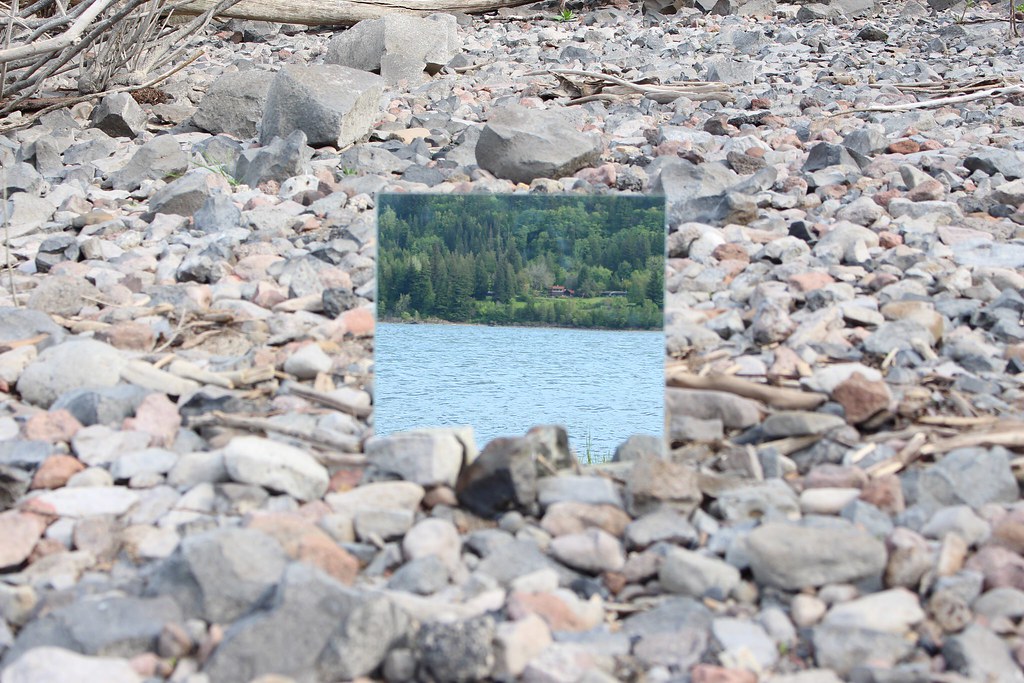



- Your thoughts not only influence your own life but the lives of others.
- Physical reality will mirror back at you your thoughts in what you perceive, feel, and experience.
- There will always be a discrepancy in your thoughts and your created reality. This discrepancy is caused by the impact of other people's reality onto yours.
- There is an infinite number of probable events that lie beneath any one manifested event. You determine which event will manifest.
- Out of an infinite number of events, a finite number of events are selected and go into a probability pool. It is from this pool that the one manifested event is selected. The events that go into this selection pool are determined by you, your reality creating skills, and others' thoughts impacting your reality.
- Thinking smartly involves not limiting the probability pool of other people with any speculations, especially if those speculations are negative.
- Thinking globally means not limiting the probability pool of world leaders and using only the most constructive thoughts when directing your attention to them.


1. Copying - unconsciously adopting patterns in your environment
2. Imitating - consciously adopting patterns in your environment for personal safety and development
3. Rope-playing - consciously adopting patterns in your environment or in our mind for influencing other people
4. Becoming - consciously adopting patterns in your environment or in your mind to change what you are (as a mystic might do)
Human beings often mimic or imitate others unconsciously. Mimicry has social benefits. Imitating others helps build rapport between two people or bond together social groups. Copying others, more broadly, can range from non-conscious processes whereby perception (seeing others engage in a certain behavior) becomes directly linked to our own behavior, to conscious strategies, where we choose to imitate either because we’re uncertain about the best course of action or because we want to fit in. As consumers, we may order the same meal that we just saw another person eat, while being unaware of the copying process. Or we may consciously copy others by asking the waiter for the most popular item on the menu. Strategic copying makes particular sense when there’s an abundance of choice, such as for books or movies. When I’m uncertain about the next DVD to rent, I often go to my favorite movie review website and make a pre-selection based on two factors: popularity (rental rank) and average favorability in expert opinions. (I use a conjunctive decision rule: the movie has to be high in both rental rank and expert opinion.)
Whether it occurs consciously or unconsciously, in face-to-face interactions or online, copying is associated with conformity. Yet people also like to maintain a certain level of uniqueness, especially in cultures valuing individualism and independence. Some time ago, I was shopping for a new jacket and found one that I liked. When I saw another shopper try on the same jacket, the purchase suddenly lost some of its appeal. (It was too expensive, anyway) Although I sometimes wonder how many others may have bought the same item of clothing, actually seeing someone else take an interest in “my” jacket made the purchase a lot less special. My illusion of individuality as a consumer was compromised.
New research by White and Argo (2011) demonstrates what may happen in those types of situations. While an imitated person can feel and behave positively towards the mimicker (being copied is flattering!), reactions are often different from consumers who are aware of being copied and feel that their distinctiveness is being compromised. In a series of experiments, the researchers found that a person’s consumption being mimicked by someone similar to them (e.g. a friend) makes it more likely for that person to distance him or herself from a product they already own. But this occurs only when the person’s distinctiveness concerns are heightened. More particularly, results showed that:
- Being primed with an independent self-construal was associated with greater disposal intentions (whether they would dispose of, throw away, pack away or give away a perfume) among people who felt similar to the person who mimicked them.
- People who noticed that they were being copied were more likely to re-customize the symbolic part of a product bundle (symbolic products are more closely tied to a consumer’s sense of self, i.e. lip gloss rather than a sponge) if they were people with high ‘need for uniqueness’ and the mimicker was similar to them.
- Being primed with an independent self-construal led to more product disposals (asking for a less desirable sandal in exchange for their initial preferred choice) among people who put a high degree of effort into acquiring the product.
Many of us would probably like to live with a certain degree of illusion about independent choice and uniqueness when it comes to products that are consumed in public (rather than in private) and possessions that define who we are as individuals. (Remember that indie band you used to like, until they became "too popular"?) Although there is a growing trend of allowing consumers to personalize products, choices are of course constrained by what is made available to us in the first place. As a result, our individuality is expressed more through a unique combination of choices than specific possessions. But those of us with a high need for uniqueness just can’t help but sometimes feel that our distinctiveness is compromised by others’ choices mirroring our own. Fortunately for us, we often live in blissful ignorance. So far, I haven’t spotted another person wearing the same jacket.
I am sick and tired of everyone asking,
"WHAT ARE YOU DOING?"
instead of
"HOW ARE YOU?"
#feelings #thoughts


The most precious gift we can offer others is our presence. When mindfulness embraces those we love, they will bloom like flowers.
- Thich Nhat Hanh
- Thich Nhat Hanh


Anything that annoys you is teaching you patience.
Anyone who abandons you is teaching you how to stand up on your own two feet.
Anything that angers you is teaching you forgiveness and compassion.
Anything that has power over you is teaching you how to take your power back.
Anything you hate is teaching you unconditional love.
Anything you fear is teaching you courage to overcome your fear.
Anything you can’t control is teaching you how to let go.


Subscribe to:
Posts (Atom)


